
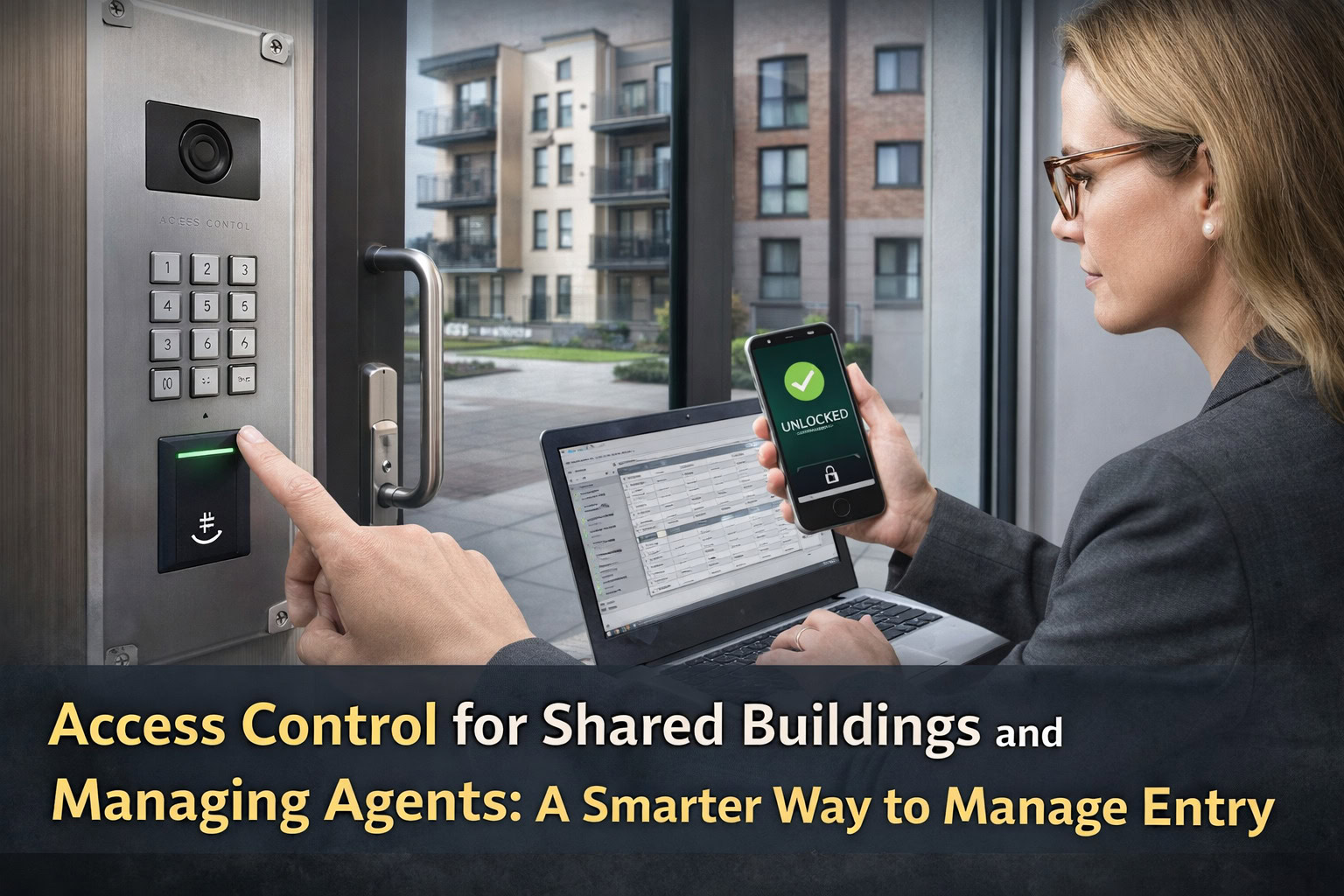
If you manage a shared building, the entry system is not a nice to have, it is a constant operational task. Residents move in and out, contractors need access, keys go missing, and every change introduces risk and cost.
Modern access control is designed to make this easier. Instead of relying on physical keys that can be copied and never returned, you can issue and revoke credentials quickly, maintain a clear access list, and reduce the need for expensive lock changes.
The common pain points in shared buildings
Managing agents and landlords often face:
- Lost keys or copied keys with no audit trail.
- Costly rekeying after tenant changes.
- Uncontrolled access for cleaners, trades and deliveries.
- Residents propping doors open due to poor entry experience.
- Complaints about unreliable door entry systems.
A smarter access setup addresses these issues with better control and visibility.
Fobs and cards: fast issue, fast revoke
Fobs and cards are the backbone of many shared building systems. When a resident leaves, you cancel their credential. When a fob is lost, you disable it. No lock changes, no key cutting runs.
Benefits:
- Immediate cancellation of lost credentials.
- Simple onboarding for new residents.
- Option for audit trails, depending on system.
Keypads: useful for contractors, but manage the risk
Keypads are convenient for temporary access, but shared codes can spread quickly. The right approach is to use:
- Unique codes per contractor where possible.
- Time limited access windows, for example weekdays 9am to 5pm.
- Regular code rotation and a simple process for updates.
Intercoms and video entry: fewer interruptions, better control
For buildings with frequent visitors, video entry can reduce disputes and missed deliveries. Residents can see who is calling and grant access remotely. Managing agents can also support access for scheduled works.
When linked to an access control system, intercom events can be tied to door unlock activity, improving accountability.
Remote management: fewer site visits, faster resolution
One of the biggest wins for managing agents is remote administration. With the right system, you can:
- Add or remove users without visiting site.
- Change access schedules for contractors.
- Review system health and receive fault alerts.
- Support residents who have lost a credential quickly.
Door hardware and reliability matter as much as credentials
Many “entry problems” are actually hardware issues: misaligned doors, worn closers, poor latches, or failing release mechanisms. A proper upgrade includes:
- Suitable electric releases or locks matched to the door.
- Reliable power supply and tidy cabling.
- Safe egress arrangements in line with fire safety requirements.
Practical policy: make the system work day to day
Technology works best with simple policies:
- A clear process for issuing and retrieving credentials.
- Charges or deposits for replacements, if appropriate.
- Contractor access requests handled through a single channel.
- Regular maintenance checks to avoid recurring faults.
Typical upgrade paths
Depending on the building, a sensible progression might be:
1) Replace a failing intercom with a modern audio or video unit.
2) Add access control to the main entrance to reduce key dependency.
3) Extend control to side gates, bin stores or car park doors if required.
4) Introduce time schedules and unique credentials for contractors.
Local support when it matters
Shared building entry systems need reliable ongoing support. Harpenden Alarms works with managing agents and building owners across Hertfordshire, Bedfordshire and Buckinghamshire, providing installation, upgrades and maintenance for access control and door entry. If you are dealing with recurring lock changes, lost keys, or resident complaints about entry reliability, a well designed access system can reduce both risk and admin time.