
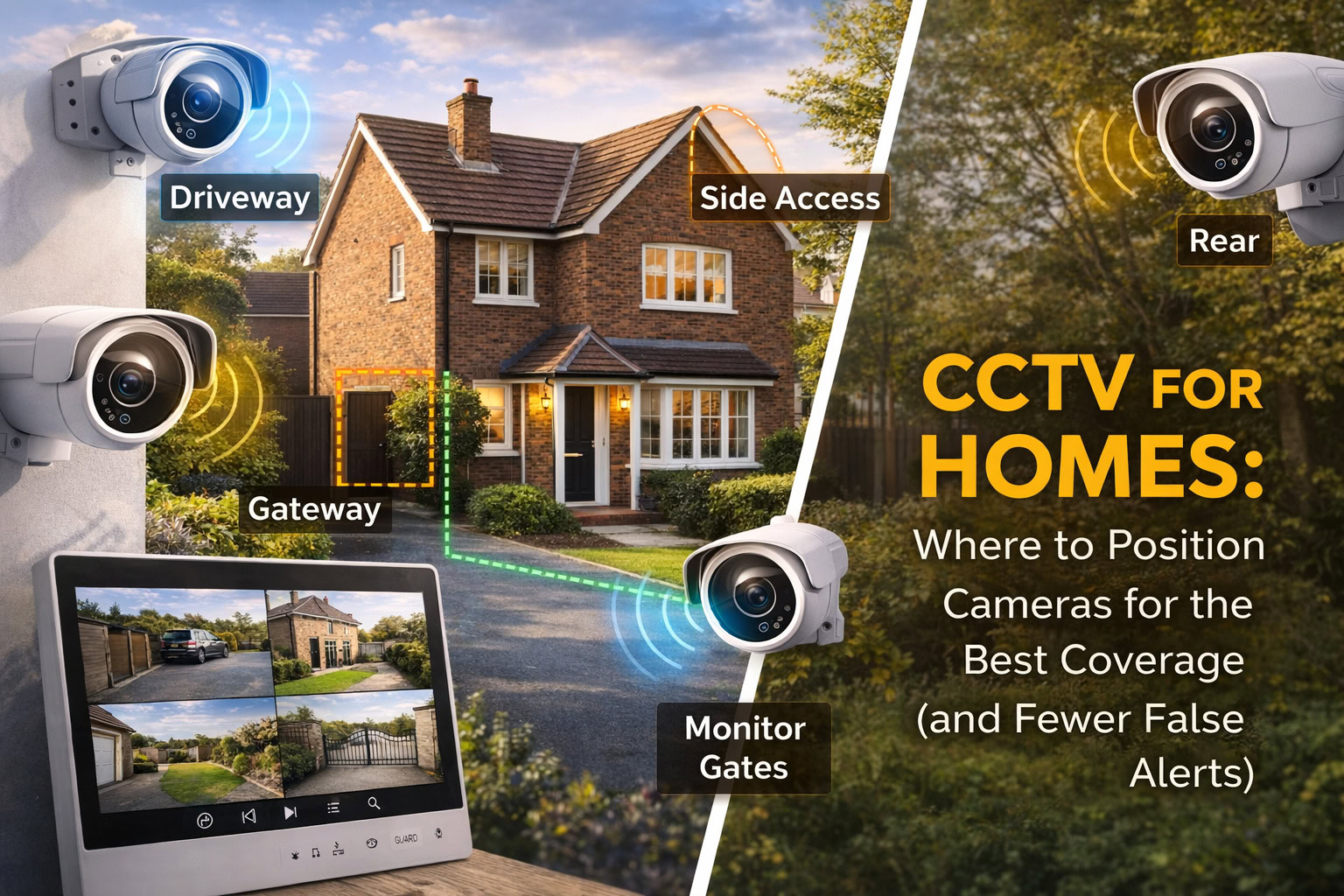
The difference between “we have CCTV” and “we have useful footage” usually comes down to positioning. A camera can be high end and still miss the moment you need if it is pointing at the wrong place, mounted too high, or fighting glare at night.
Here is a practical guide to placing home CCTV for strong coverage and fewer nuisance notifications.
Start with the risks, not the number of cameras
Most homes need coverage for:
- The front approach and driveway.
- The front door and porch area.
- Side access to the rear.
- The rear door and patio.
- Any detached garage, shed or gate.
A simple plan is often 2 to 4 cameras, placed to cover routes rather than wide, empty areas.
1) Front door: capture faces, not just movement
Your front door camera should see faces clearly as people approach and when they stand at the door. If it is mounted too high, you will get the top of a head and shoulders.
Tips:
- Mount around 2.1 to 2.4 metres where practical.
- Angle slightly down and towards the approach path.
- Avoid pointing directly at bright sky or reflective porch glass.
If you already have a video doorbell, a separate camera can still help by capturing the wider approach, including vehicles and side angles.
2) Driveway and vehicles: get the approach and the exit
Driveways are high value zones. Position a camera to view the approach and any parked vehicles, but do not rely on a single wide shot.
Tips:
- Use one camera to cover the entry point from the street.
- Use a second angle that covers the vehicles from the side or corner.
- If number plates are important, you may need a dedicated view with the right angle and exposure settings.
3) Side access: the quiet route most people ignore
Side paths are common entry routes because they are hidden from view. A camera here is often the best value you can add.
Tips:
- Place the camera to see along the path, not across it.
- Use motion zones to ignore trees, bushes and public footpaths.
- Add a PIR light, but avoid shining directly into the lens.
4) Rear garden and patio: cover doors and ground floor windows
Rear gardens are often private, which unfortunately can also mean less natural surveillance.
Tips:
- Cover the rear door and the area immediately outside it.
- Ensure the camera can see ground floor windows, especially those near fences.
- If you have a flat roof or extension, consider an angle that covers access to upstairs windows.
5) Detached garages and outbuildings
If you keep tools, bikes or garden equipment, treat outbuildings as part of your security plan.
Tips:
- A camera should see the outbuilding door and the route to it.
- If WiFi is weak, use wired network cabling or a reliable wireless bridge rather than hoping a cheap extender will cope.
Mounting height, angles and image quality
Mounting too high reduces face detail. Mounting too low risks tampering. For most homes, around 2.5 to 3 metres is a sensible compromise for general coverage, with the front door view slightly lower if possible.
Avoid:
- Cameras pointing at street lights or direct sun at sunrise or sunset.
- Strong reflections from windows.
- A lens that looks through spider webs or overhanging foliage.
Reducing false alerts and “notification fatigue”
Most false alerts come from:
- Trees and hedges moving in wind.
- Passing cars or pedestrians on the pavement.
- Pets in the garden.
- Headlights flaring the sensor at night.
Solutions:
- Tighten motion zones to focus on your property boundary.
- Use smart detection where available, such as human or vehicle detection.
- Adjust sensitivity and schedule alerts for when you actually want them.
Don’t forget the legal and privacy side
If your cameras capture beyond your boundary, you should be mindful of privacy. In practice, this often means using privacy masking and positioning cameras to avoid neighbour windows where possible.
A professional design saves money
A quick survey can prevent common mistakes: buying too many cameras, placing them too high, or overlooking the side access route. Harpenden Alarms designs and installs home CCTV across Hertfordshire, Bedfordshire and Buckinghamshire, with coverage focused on clear, usable footage and a system you will actually keep switched on.