
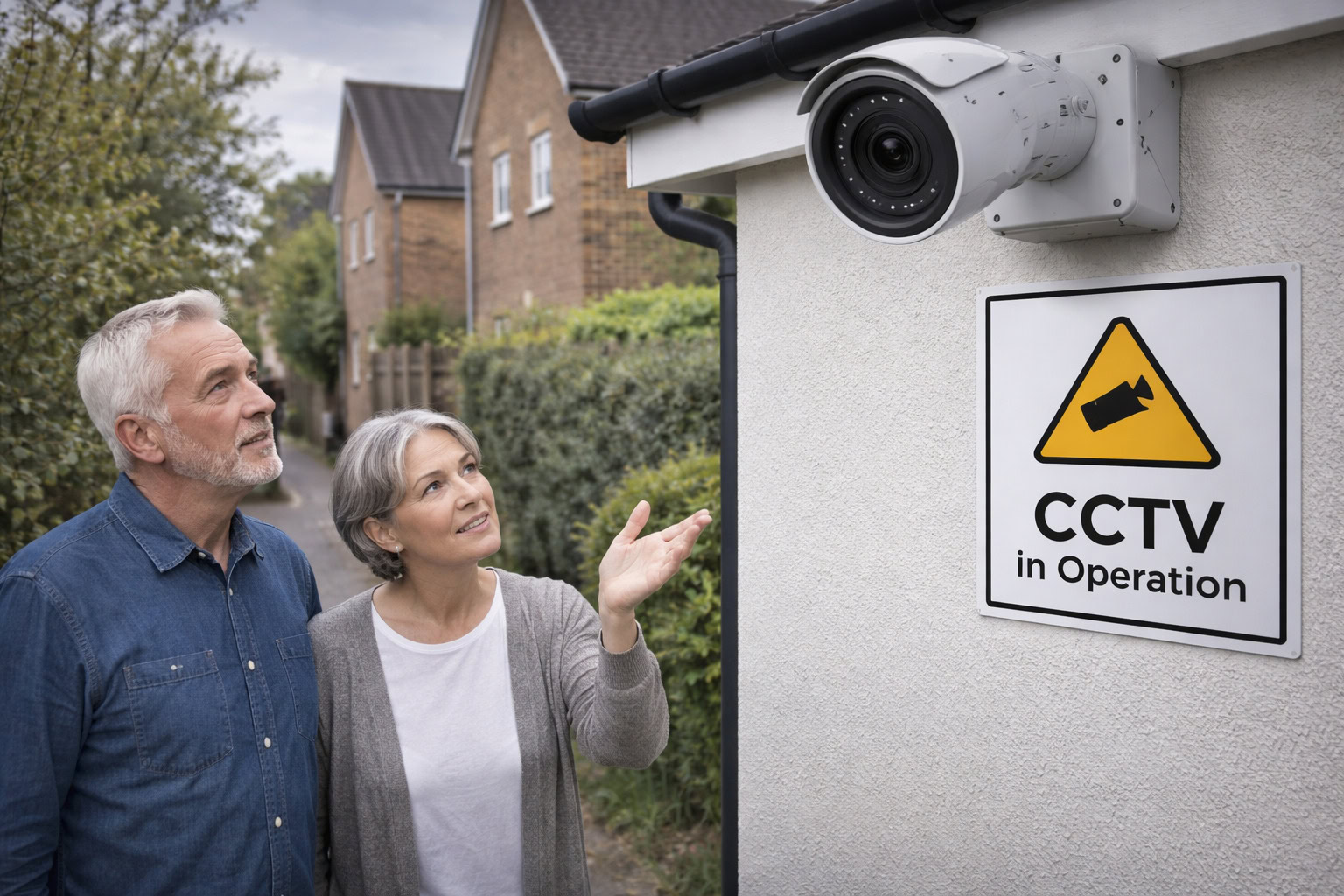
Home CCTV is a sensible security measure, but it comes with responsibilities, especially if your cameras capture beyond your boundary. Most people are not trying to watch neighbours; they just want to protect their home. The goal is to set up your system so it delivers security benefits while respecting privacy and avoiding unnecessary disputes.
This guide covers the practical steps UK homeowners can take to keep CCTV fair, proportionate and effective.
1) Start with purpose and proportion
Ask yourself what you are trying to achieve. Common purposes include:
- Monitoring your front door and driveway.
- Covering side access to the rear.
- Protecting a garage, shed or gate.
- Capturing evidence after an incident.
Once you have a clear purpose, position cameras to cover that area, not the entire street or a neighbour’s windows.
2) Positioning to minimise overspill
Overspill is when your camera view includes areas you do not need, such as:
- A neighbour’s garden or windows.
- A public footpath beyond your boundary.
- The road outside for long stretches.
Practical tips:
- Mount cameras so they look slightly inward towards your property.
- Use tighter field of view where available, rather than a super wide lens.
- Avoid mounting too high with a wide angle that captures everything.
3) Use privacy masking where possible
Many modern CCTV systems allow privacy masking, which blocks out parts of the image with a permanent overlay. This is useful if you cannot avoid a small amount of overspill due to the layout.
For example, you can mask a neighbour’s bedroom window while still covering your side access route.
4) Be careful with audio recording
Some cameras record audio. Audio can feel more intrusive than video, and it is rarely necessary for home security. If audio is not essential, consider disabling it.
5) Recording, retention and access control
A responsible setup includes sensible management of footage:
- Keep footage only as long as you need for security purposes.
- Restrict access to recordings to household members who need it.
- Use strong passwords and unique logins, especially for remote viewing.
- Keep the system updated and avoid sharing admin credentials.
6) Signage: when it helps
Even if you are a private homeowner, a small sign can reduce misunderstandings and increase deterrence. It signals that CCTV is in use for security, which is usually the point.
If your cameras capture public areas, signage becomes more important. At a minimum, ensure it is clear that CCTV is operating.
7) Talking to neighbours: the easiest way to avoid conflict
If you are installing cameras that could potentially see near a boundary, a short conversation can prevent future disputes. Explain what you are covering and, if needed, show them the camera view and how privacy masking works.
Most objections come from uncertainty. Transparency usually resolves it quickly.
8) Common mistakes to avoid
- Pointing a camera directly at a neighbour’s property “just in case”.
- Using a single high mounted camera with a huge wide angle that captures far more than necessary.
- Leaving default passwords in place.
- Enabling audio recording without a clear reason.
- Creating constant nuisance alerts that lead you to ignore notifications altogether.
9) A balanced security setup
Privacy friendly CCTV often works best alongside other measures:
- Good exterior lighting to reduce the need for aggressive camera angles.
- An intruder alarm for immediate deterrence and alerts.
- Physical security on gates and sheds to reduce temptation.
Local advice for sensible, effective CCTV
Harpenden Alarms installs CCTV systems for homes across Hertfordshire, Bedfordshire and Buckinghamshire. We prioritise coverage that captures what matters on your property, while using positioning and privacy features to minimise overspill. If you want CCTV that feels appropriate and provides genuinely useful footage, a short survey and a clear plan will get you there.