
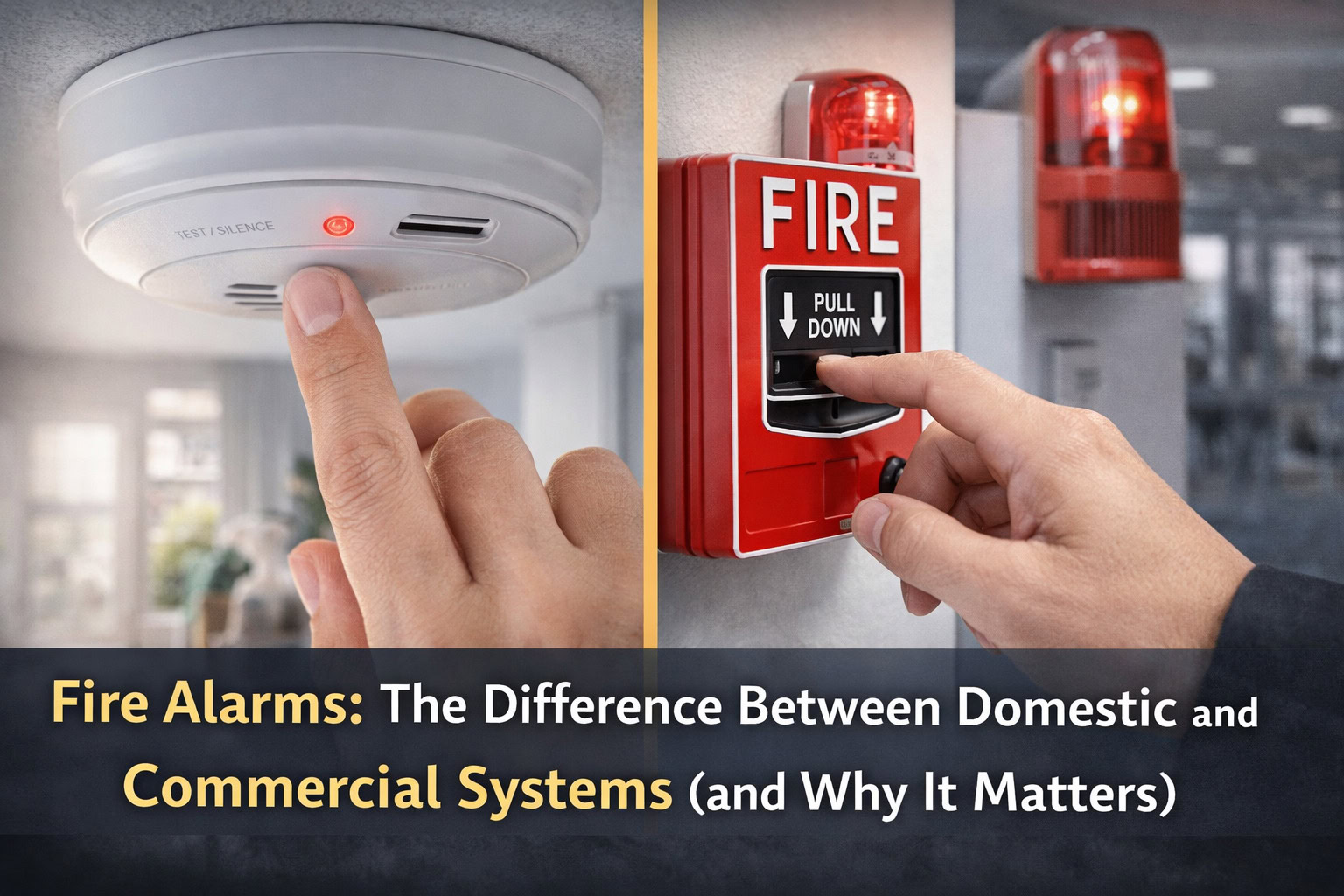
Fire detection saves lives, but not all fire alarm systems are the same. A domestic setup in a house is designed for a small number of occupants who know the building well. A commercial system may need to protect staff, visitors and vulnerable people, and it often has to support a formal fire risk assessment and ongoing maintenance regime.
Understanding the difference helps you choose the right solution and avoid false confidence from an inappropriate setup.
Domestic fire detection: typical homes
In a typical UK home, fire detection usually includes:
- Smoke alarms on escape routes, such as hallways and landings.
- Heat alarms in kitchens to reduce false activations from cooking.
- Possibly additional detection in garages or utility rooms.
Domestic alarms are often mains powered with battery backup, interconnected so that if one activates, they all sound. The focus is early warning so occupants can escape quickly.
Domestic priorities:
- Quick detection on escape routes.
- Simple user testing, usually via a test button.
- Minimal false alarms, especially in kitchens.
Commercial fire alarms: workplaces and public buildings
Commercial systems are designed around:
- The building layout and occupancy.
- The findings of a fire risk assessment.
- The need to alert many people and, in some cases, trigger other actions.
A commercial system may include:
- Manual call points (break glass units).
- A fire alarm control panel with zone indication.
- Sounders, beacons, or voice alarms depending on the site.
- Detection types suited to different areas, such as smoke, heat, or multi sensor devices.
- Interfaces to other systems, for example door releases, plant shutdown, or monitoring.
Commercial priorities:
- Clear, site wide warning and evacuation management.
- Defined testing and maintenance routines.
- System fault monitoring and logbook records.
Why the difference matters
**1) System design and coverage**
A domestic setup is not designed to cover large premises with multiple zones and fire doors. Commercial systems often need to indicate where an activation occurred, which helps with investigation and safe evacuation management.
**2) Responsibilities and documentation**
Businesses typically need documented testing, maintenance and fault management. If you have a control panel system, you should expect routine testing and periodic inspections.
**3) False alarms and disruption**
False alarms in a workplace cause disruption and can lead to complacency. Correct detector selection and placement is crucial, for example using heat detection in areas with steam or fumes.
**4) Integration and safety controls**
Commercial fire alarms may interface with door releases, emergency lighting tests, or monitored signalling. A domestic alarm does not typically handle these functions.
What about mixed use buildings?
Some buildings sit between domestic and commercial, such as HMOs, small clinics, or premises with a flat above a shop. These require careful design. You want a system that protects occupants appropriately without unnecessary complexity.
Testing and maintenance in simple terms
Domestic:
- Regular user testing, often monthly.
- Replace batteries and units as recommended.
Commercial:
- Routine testing of call points and system functions.
- Planned maintenance visits.
- Record keeping, including faults and remedial work.
Exact requirements depend on building type and risk profile, so professional advice is important.
When to speak to a professional
You should consider a professional assessment if:
- You are responsible for a workplace or public access building.
- You have staff, customers or vulnerable occupants on site.
- Your current setup produces frequent false alarms.
- You have a control panel system and are unsure about testing and maintenance.
Harpenden Alarms supports fire alarm installation and maintenance across Hertfordshire, Bedfordshire and Buckinghamshire. If you are unsure whether your current system is appropriate, we can advise based on your building and operational needs, helping you meet your responsibilities without overcomplicating the solution.