
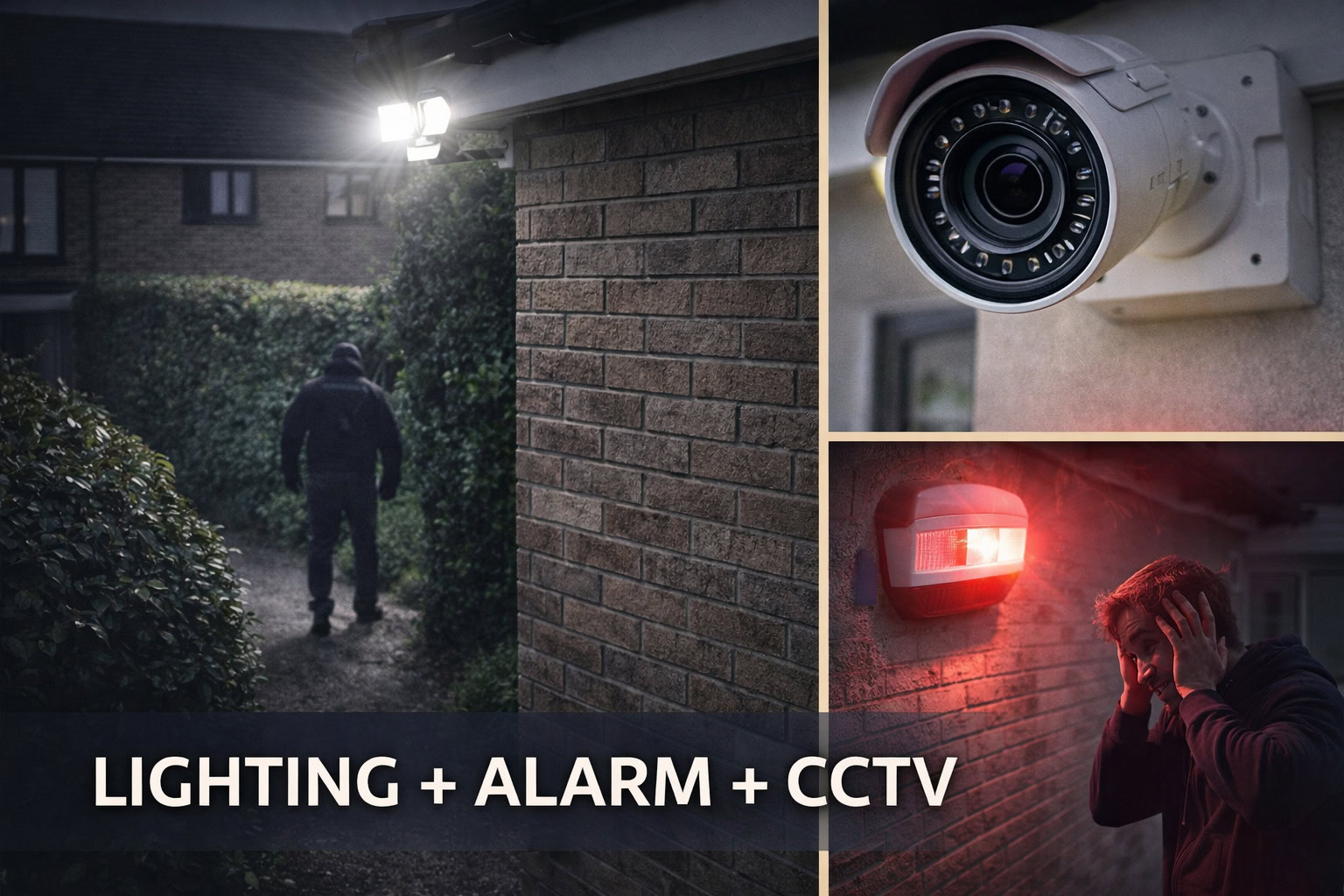
Most security problems are not solved by one product. A camera without lighting can produce unusable footage at night. An alarm without visible deterrence may trigger after someone has already entered. Lighting without detection helps, but it will not tell you what happened later.
A layered approach combines deterrence, detection and evidence, which is why lighting, an intruder alarm and CCTV together usually outperform any single system on its own.
Layer 1: Deterrence, making your property a less attractive target
Deterrence is the quiet win. If an opportunist decides your property looks harder than the one next door, you have already succeeded.
Deterrence tools include:
- Well placed exterior lighting on approaches and side access.
- Visible cameras and signage.
- A maintained alarm system with external sounder.
- Good physical security on doors, windows, gates and outbuildings.
Lighting is often the best value deterrent because it removes cover. It also supports cameras, which is crucial for night clarity.
Layer 2: Detection, spotting an issue early
Detection is about knowing something is happening in time to act.
Intruder alarms are built for detection. They can:
- Trigger immediately when a protected route is breached.
- Alert you via an app, or via monitoring if required.
- Encourage quick exit due to sounders and attention.
CCTV can also detect motion, but it is not always the best first line detector, especially if it produces constant alerts from wind, pets or passing traffic. Used together, the alarm can be your primary trigger, while CCTV provides the verification.
Layer 3: Evidence, knowing what happened and supporting action
If an incident occurs, evidence matters:
- Identifying people and vehicles.
- Showing the sequence of events.
- Supporting police reports or insurance claims.
- Resolving disputes about deliveries, damage or access.
CCTV is the main evidence layer, but only if it is designed properly:
- Cameras positioned to capture faces and routes.
- Night performance supported by good lighting.
- Recording retention long enough for you to discover issues.
- Secure access so footage is not lost or misused.
How the layers support each other
**Lighting improves CCTV**: fewer silhouettes, better facial detail, fewer false triggers from infrared glare and insects.
**Alarm improves CCTV usability**: alarms can trigger recording bookmarks and notifications so you do not have to scroll through hours of footage.
**CCTV improves alarm response**: you can verify whether an alarm is likely to be genuine before you act, which is particularly useful for business owners managing out of hours alerts.
A balanced setup without overspending
For many homes and small businesses, a sensible layered plan looks like:
- PIR lighting on driveway, side path and rear door.
- An intruder alarm covering entry doors, key routes and high value rooms.
- Two to six CCTV cameras covering approaches and choke points, not empty space.
The key is design, not quantity. A smaller number of well positioned devices usually beats a larger number of poorly placed ones.
Common mistakes to avoid
- Installing cameras but leaving side access unlit.
- Mounting cameras too high and losing face detail.
- Relying on app motion alerts instead of a proper alarm, then ignoring notifications due to volume.
- Focusing only on the front of the property while leaving the rear and outbuildings unprotected.
Get the layers working together
Harpenden Alarms designs integrated security for homes and SMEs across Hertfordshire, Bedfordshire and Buckinghamshire. If you want a setup that deters problems, detects issues early, and provides clear evidence when you need it, we can recommend a layered system that fits your property and budget, installed neatly with reliable ongoing support.